MotoJitsu
- 4.8
- Rating
- 10.00K
- Installs
- $9.99
- Price

 Analysis by App-foxy
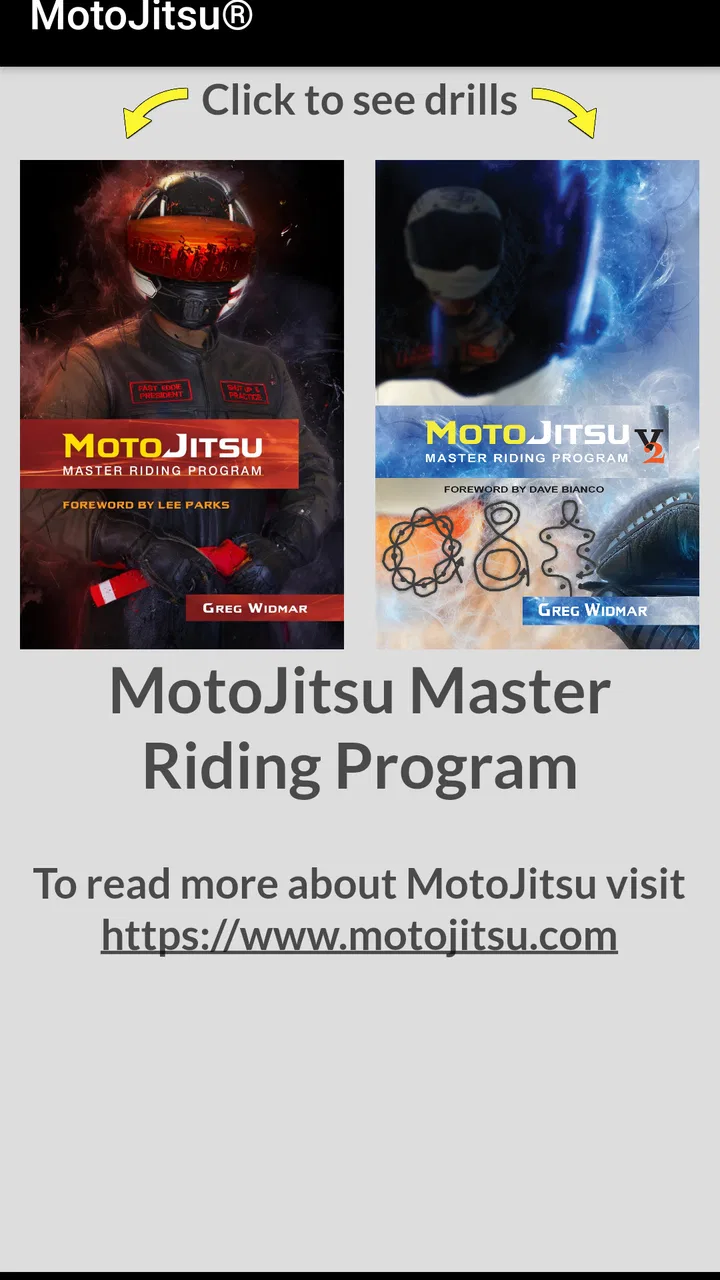
I approached MotoJitsu as a practice companion rather than a conventional entertainment app. It belongs to the Auto & Vehicles category and comes from MotoJitsu, with a clear focus on helping riders work through the drills connected to the MotoJitsu Master Riding Program volumes one and two. That focus makes it much more specific than a general motorcycle video library or a casual riding tips app.
My overall impression is that it is most useful when I treat it as part of a deliberate riding routine. I do not open it expecting a game-like experience, a route planner, or a replacement for an instructor. I open it when I want structure: a drill to revisit, a skill area to practice, and a way to make a short session in a parking lot feel more purposeful. For a rider who already wants to improve control, that narrow purpose is a real advantage.
How the app feels during an actual practice session
I use a practice session to test one skill, not to race through a menu of exercises. Before I ride, I decide what I want to notice—such as whether my inputs stay smooth when a maneuver feels awkward—and keep the phone aside once practice begins. That approach makes the drills more useful as a learning tool and brings up the next question: how much confidence should I place in the guidance itself?
You May Also Like

 Pandora - Music & Podcasts
Pandora’s Music Is Easy to Start, but Harder to Recover
Pandora’s strength is its low-effort path from a seed to a station. Its weak spot is how much confidence it asks you to place in connection, setup, and quiet recovery.

 8 Ball Pool
 Is Built on Rivalries, Rematches, and Routine
A close look at the rivalries, rematches, shared routines, and unanswered safety questions that turn a quick pool match into a persistent mobile community.

 Samsung Music
’s Quiet Strength Is Playing What You Already Own
Its reach comes less from spectacle than from dependable access to a personal library. That simplicity is both the app’s strongest retention engine and its ceiling.

 AccuWeather: Weather Radar
AccuWeather Review: A Quick, Clear Forecast for Everyday Decisions
For everyday plans, the best forecast is the one you can understand quickly. AccuWeather makes rain timing, radar, and local conditions easy to act on, with a few trade-offs.

 Hill Climb Racing
Why Hill Climb Racing Still Turns Crashes Into One More Run
A tiny car, a bumpy hill and one more upgrade: Hill Climb Racing keeps resurfacing because its simple chaos makes every near-miss feel personal.

 AliExpress - Shopping App
AliExpress Makes Global Shopping Feel Personal, but Shoppers Bear the Risk
AliExpress turns a global marketplace into a pocket-sized discovery engine. Its reach is useful, its shopping loop compelling, and its trade-offs easy to miss.
More From Our News Desk
View All News


A focused start instead of a slow search
The first thing I value in this kind of app is how quickly I can move from deciding to practice to actually knowing what I should work on. MotoJitsu is built around the riding-program drills, so its identity is clearer than that of a broad motorcycle app filled with unrelated articles, routes, news, and accessories. The experience makes more sense when I arrive with a goal, such as improving low-speed control or making a familiar exercise more consistent.
That focus also shapes my expectations about speed. I would not judge it by the same standard as a social feed or a lightweight calculator. Its practical speed is the time it takes to find useful instruction, understand the intended exercise, and get away from the screen to ride. In that respect, a compact, drill-centered layout is more valuable than a large collection of distractions.
I found it helpful to decide on a session before opening the app. I might choose one control skill, review the relevant drill, and then leave the phone alone while practicing. This prevents a common problem with training apps: spending more time browsing than doing. MotoJitsu works best when the phone is a briefing tool, not the center of the activity.
What the two program volumes mean for the user
The inclusion of material from both volumes gives the app a broader training path than a single isolated exercise collection. I see that as useful for riders who want to return to familiar drills while gradually adding variety. Repetition matters on a motorcycle, and a drill can feel simple on paper while exposing inconsistent throttle, clutch, braking, or balance habits in practice.
At the same time, having more material does not automatically create a complete personal coaching plan. I still need to decide how often to repeat an exercise, when to stop, and which skill deserves attention first. The app can provide direction, but it cannot watch my body position, hear every engine input, or correct a mistake in real time. That distinction is important for newer riders who may assume that a structured program removes the need for judgment.
My preferred workflow is simple. I review one drill before riding, identify the main action I need to control, and set up a safe practice area away from traffic. Afterward, I make a mental note of what felt unstable and return to that drill later. This approach turns the app into a repeatable reference instead of something I consume once and forget.
Performance during heavier use
Heavy use here is not the same as demanding a phone game with constant animation or a navigation app tracking a long journey. The more realistic strain comes from repeatedly opening the app during several practice sessions, moving between drills, and checking instructions before returning to the motorcycle. That makes perceived responsiveness more important than flashy presentation.
For that pattern, the app’s value depends on reducing friction. I want to find the exercise without a long detour, read enough to understand the task, and put the device away. A training reference that encourages repeated short visits can be more practical than one that expects a long reading session. It also helps preserve attention for the riding environment, which should always take priority over the screen.
There is a trade-off, though. A rider looking for deep progress tracking, detailed personal analytics, or a fully automated training calendar may find this format limited. The app’s strength is the content and practice direction, not turning every session into a quantified report. I would choose a separate tracking method if recording repetitions, dates, or performance trends were central to my training.
Reliability and confidence on the road
Reliability has two sides in a motorcycle training app. The first is whether the app remains dependable as a reference. The second is whether the guidance encourages responsible practice. I treat MotoJitsu as something to consult before riding, not while moving. That habit matters more than any convenience feature because reading from a phone during a maneuver would create an unnecessary distraction.
The app is rated for Everyone, which makes it broadly approachable from a content-rating perspective, but that does not mean every drill is suitable for every rider or every location. A beginner should still match an exercise to personal ability, motorcycle size, tire condition, surface quality, and available space. A familiar drill can become inappropriate when the ground is dirty, wet, crowded, or too close to other vehicles.
I also see value in using the app as a consistency check rather than treating it as permission to push harder. Progress in motorcycle control is not always visible through speed or difficulty. Smoother inputs, fewer corrections, and greater calm at low speed can be better signs than attempting a more ambitious variation too soon.
Where device limitations become noticeable
The app supports Android devices running version 7.0 or later, so compatibility reaches a wide range of phones. Still, an older compatible device may not offer the same comfort as a newer one. Screen size, brightness, battery condition, and general responsiveness all affect how pleasant it is to review material before a ride.
I would avoid mounting the phone as a reading surface during practice. Even if a rider has a secure mount, the safest workflow is to study the exercise while stationary, then keep attention on the motorcycle and surroundings. A phone that is easy to use in a garage can become awkward in direct sunlight, with gloves, or in a noisy outdoor setting. Those are practical constraints rather than flaws unique to this app.
Storage and battery demands should also be considered in a sensible way. I would not expect a drill reference to place the same load on a device as a navigation session, camera recording, or a graphics-heavy game. However, riders who combine training with video capture, navigation, Bluetooth audio, and a weak battery may experience a less convenient overall session. In that situation, the app is only one part of the device workload.
For an older phone, I would prepare before leaving: review the chosen drill, charge the device, adjust text visibility if needed, and avoid depending on constant screen access outdoors. That small routine makes the app feel more reliable because it removes avoidable interruptions.
Price and the kind of value it offers
MotoJitsu costs $9.99, so I would not recommend it automatically to every rider who owns a motorcycle. The value depends on whether the drills will actually be practiced. If I only want occasional inspiration or a few free riding tips, general videos and community discussions may be enough. They are easier to sample and do not ask for the same commitment.
The purchase makes more sense for someone who wants a dedicated reference tied to the MotoJitsu Master Riding Program and expects to revisit the exercises. The cost is easier to justify when I use the app repeatedly across multiple sessions rather than treating it as a one-time read. In other words, the benefit comes from applying the material, not merely owning access to it.
I would also separate the app’s price from the possible cost of practicing. A safe session may require a suitable open area, protective equipment, fuel, and enough time to concentrate. The app can organize the learning portion, but it does not remove those real-world requirements. Riders who are already committed to regular practice are more likely to feel that the purchase earns its place.
How it compares with common alternatives
The usual alternative is a mixture of online videos, riding forums, printed manuals, and advice from friends. Those options can be useful, especially when I want different explanations or a second opinion. They also vary widely in quality and may not present a clean progression from one exercise to the next.
MotoJitsu’s advantage is concentration. Instead of searching through unrelated motorcycle content, I can return to a training-specific source. That reduces the chance of losing an evening to browsing gear reviews, dramatic riding clips, or advice that does not match my immediate goal. The trade-off is breadth: a general motorcycle platform may cover maintenance, touring, buying decisions, road rules, and community discussion, while this app stays centered on riding practice.
A live coach remains better when I need immediate correction. An instructor can notice posture, timing, fear, or a habit I do not recognize myself. MotoJitsu is more convenient for independent repetition and can help me arrive at a coaching session with clearer questions, but it should not be treated as a substitute for hands-on feedback when safety or confidence is a concern.
Printed material has its own strength because it does not depend on a phone screen. A manual can be easier to annotate and keep beside a workbench. The app is more convenient when I want a portable reference and do not want to carry extra pages, but the phone introduces the distractions and outdoor-readability issues that paper avoids.
Small details that improve the way I use it
One useful insight is to treat each drill as a diagnostic rather than a test of bravery. I do not ask whether I can make the maneuver look impressive. I ask which input becomes inconsistent first. That change in attitude makes the app more valuable because it turns practice into observation: I can identify whether I rush, stare at the wrong point, tense my arms, or make abrupt corrections.
A second insight is to separate review time from riding time. I read the instructions while parked, decide what I will repeat, and then stop looking at the screen. This creates a cleaner mental boundary and avoids the temptation to check the phone after every attempt. It is especially useful when practicing in a public area where other vehicles, pedestrians, and changing surfaces demand attention.
A third is to use deliberate repetition instead of trying to cover both program volumes in a single outing. A short session with one clear objective is easier to evaluate than a long session filled with unrelated drills. If the first exercise exposes a weakness, repeating it on another day may teach me more than immediately moving to something new.
A fourth is to compare how the motorcycle feels at the beginning and end of a session without chasing fatigue. If control becomes worse because I am tired, I stop. The app can encourage practice, but it cannot judge my physical or mental condition. That final decision remains mine, and it is one of the most important parts of using any riding-training resource responsibly.
Who should use it, and who should pass
I would recommend MotoJitsu to riders who enjoy self-directed learning, have a safe place to practice, and want a focused collection of exercises rather than a broad motorcycle information hub. It is particularly appealing to someone who has watched general riding content but still needs a practical reason to go outside and repeat specific skills.
It can also suit an experienced rider who feels rusty. Returning to fundamental control work is not a sign of weakness, and a structured drill reference can make that return less random. Riders preparing for more confident everyday maneuvering may appreciate having a consistent practice source instead of relying on memory or changing advice from different videos.
I would skip it if I am looking for navigation, maintenance instructions, motorcycle shopping guidance, social interaction, or live coaching. I would also hesitate if I am unwilling to practice regularly. A training app cannot create improvement through passive reading, and the purchase will feel less worthwhile when the exercises remain theoretical.
My performance verdict after weighing convenience and limits
MotoJitsu feels strongest as a focused, repeat-use training reference. Its perceived speed comes from having a defined purpose rather than from overwhelming the rider with tools. Its resource demands appear appropriate for a drill-centered app, while the more important device concerns are practical ones: screen visibility, battery health, and keeping the phone out of the rider’s attention during movement.
The current version is 1.5.2, and the app has reached over ten thousand installs. Its average rating is 4.8 from around two hundred ratings, with dozens of written reviews, which suggests that the focused approach resonates with its audience. I see those figures as useful context, not a replacement for deciding whether this particular training style fits me.
My honest recommendation is conditional but positive: buy it if you want to practice the MotoJitsu program drills and are prepared to use them repeatedly. The $9.99 price is reasonable for a committed rider who values a dedicated reference, but less attractive for someone seeking a complete motorcycle companion. I would keep a coach, a safe practice plan, and my own judgment in the loop.
In daily use, the app earns its place when it gets me off the phone and onto the motorcycle with one clear task. That is the best measure of its success. It does not need to be a full digital garage or a flashy riding game; it needs to make purposeful practice easier. For the right rider, MotoJitsu is most valuable as a structured bridge between learning a drill and repeating it with real attention.
FAQs for MotoJitsu
01What is MotoJitsu, and what can I use it for?
MotoJitsu is a motorcycle training and riding education app designed to help riders improve their skills through structured lessons, demonstrations, drills, and educational content. It focuses on areas such as cornering, braking, body positioning, slow-speed control, and riding awareness. It can be useful for beginners building confidence as well as experienced riders looking to refine technique and ride more deliberately.
02Is MotoJitsu suitable for beginner motorcycle riders?
Yes, MotoJitsu can be helpful for beginners, although users should approach every exercise at a comfortable pace and practice only in a safe, controlled environment. The app explains fundamental riding concepts and provides guidance that may make learning easier. However, it should complement—not replace—professional instruction, proper licensing, protective gear, and supervised practice when a rider is still developing basic motorcycle control.
03Does MotoJitsu require a subscription or in-app purchases?
MotoJitsu may include free material as well as premium lessons, courses, or other content that requires payment, depending on the version and platform available at the time of download. Before subscribing, review the listing and in-app purchase details carefully, including billing frequency, trial conditions, and cancellation rules. Availability and pricing can vary between Android, iOS, regions, and promotional offers.
04Can I use MotoJitsu without an internet connection?
Offline access depends on the specific MotoJitsu content and how the app handles downloaded lessons or videos. Some information may remain available after it has been loaded, while streaming-based material generally requires an active internet connection. If you plan to study while traveling or at a riding location with limited coverage, check whether the desired courses can be downloaded and confirm how much storage they require.
05Does MotoJitsu replace motorcycle safety courses or professional coaching?
No. MotoJitsu is an educational resource and practice aid, not a substitute for a certified motorcycle safety course, qualified coaching, or the rules of your local licensing authority. Riding exercises should be performed legally, away from traffic, and with suitable protective equipment. Motorcycles behave differently, road conditions change quickly, and riders should stop any drill that feels unsafe or beyond their current ability.
Pros
- Clear
- beginner-friendly explanations of motorcycle riding techniques.
- Useful drills help riders build confidence and improve control.
- Covers cornering
- braking
- throttle use
- and other essential skills.
- Videos are easy to follow and suitable for different riding levels.
- Practical advice can complement lessons from a riding instructor.
Cons
- Some advanced content may require a paid subscription or separate purchase.
- Video-based learning cannot replace supervised
- hands-on motorcycle training.
- Advice may not suit every bike type
- riding style
- or local road condition.
- Beginners may need extra context to apply techniques safely in traffic.
- The amount of content can feel overwhelming when starting out.

MotoJitsu
Gallery